


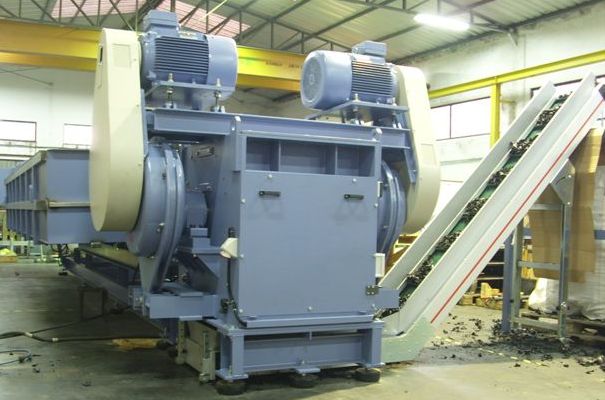
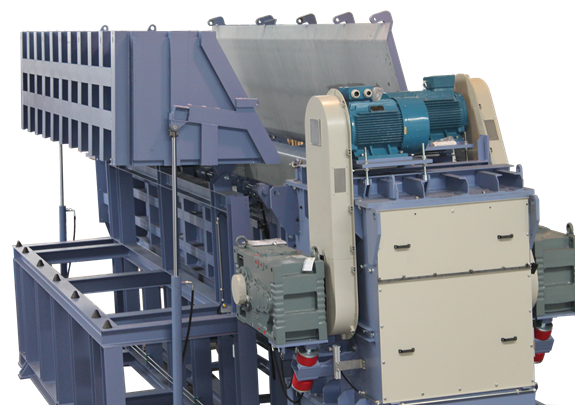

Shredders for pipes and profiles
This range of shredders is used for recycling of pipes and thick, large-section profiles.
The materials to be recycled are fed in via a loading tunnel with a safety cover.
The profiles are hydraulically pressed against the rotor, and the movement of the ram is controlled by the motor’s consumption.
The design of the blades, rotor and infeed system, have been optimized to obtain a high-density end product, thanks to the large thickness of shredded material that is obtained.
 Descarregar catálogo
Videos
FORM 
Shredders
Products
Suggested

Shredders for volumous items
For some applications, like hollow pieces, it is used a vertical ram, along with the standard horizontal one. The material to be ground is pressed downward by the vertical ram, thereby compressing larger items.

Granulators HSR
The closed-circuit recycling of edge trims in extrusion industry gives the following advantages: - immediate reuse as raw material - elimination of the risk of contamination - stock reduction of raw material - gains of space in the production area - elimination of the workforce in the treatment of edge trims. For this effect Palbase developed one solution simple, efficient and economic.

Friction washers
The friction washer is intended for washing and separation of rigid and flexible plastics through the friction, it is composed of an high speed rotor. This equipment is made in stainless steel AISI 304 in the surfaces in touch with the product, being the rotor built in the treated carbon steel or stainless steel. The water and small particles flow through a perforated sieve. Piping with sprinklers carry out the water injection for the washing process. The equipment is built with quick access devices to screens for easy cleaning and maintenance. The rotor is hold on load bearings high capacity and the sealing system ensures a long bearings life.

Screw dryer-pressers
The screw dryer-presser removes part of the water from the material after washing, allowing very efficient drying without loss of raw material. The screw conveys and compresses the material by removing water through perforated screens. At the end, a decompressor is mounted to deliver the loose material to the next process. It stands out for its efficiency and low noise.